Why Gymnastic Strength Matters for your Barbell Lifts
Maria Lempicki • March 30, 2026
The missing link between moving well and lifting heavy
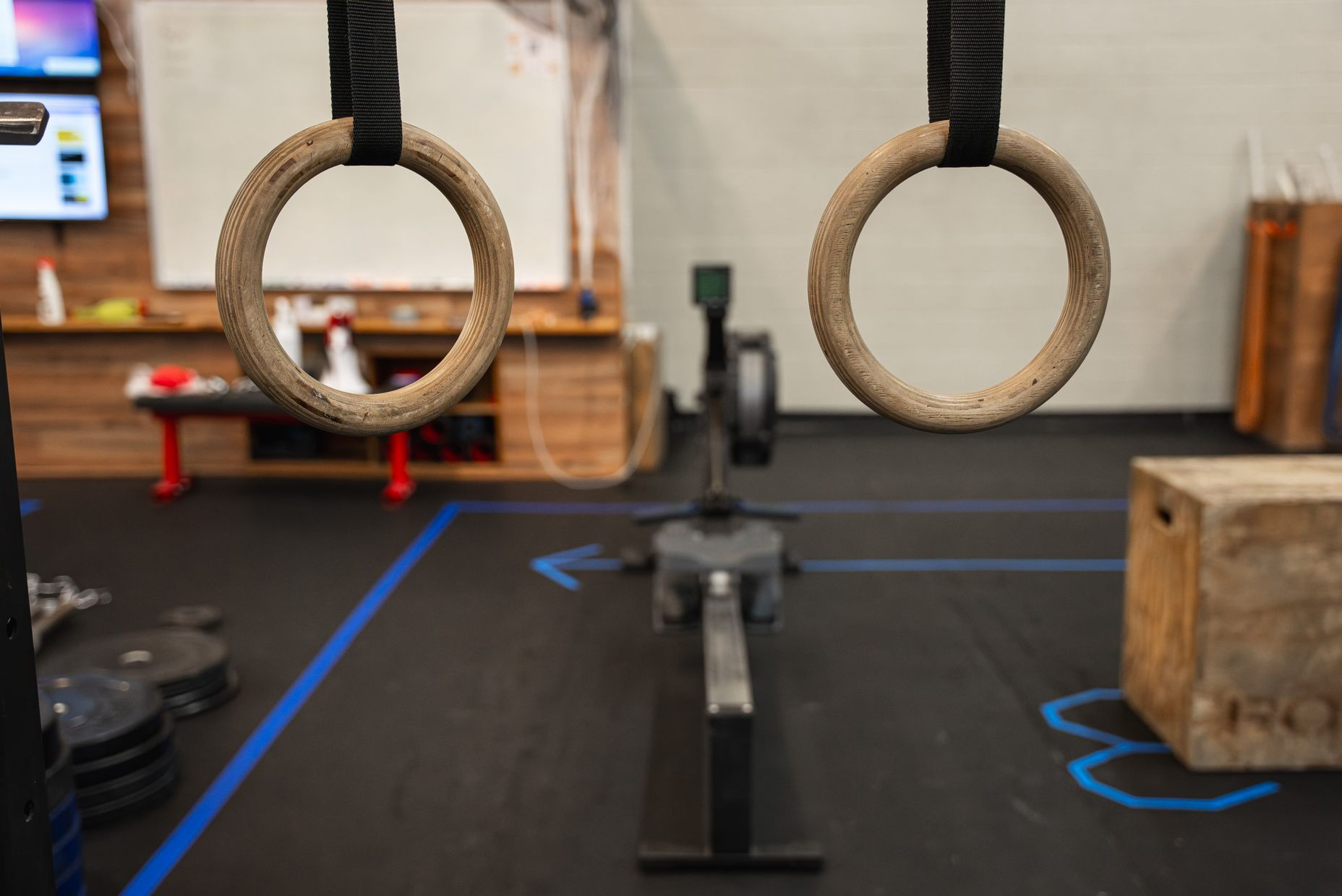
At first glance, gymnastics work and barbell lifting can feel like two completely different worlds. One is bodyweight control—pull-ups, handstands, toes-to-bar. The other is moving heavy external loads—squats, cleans, snatches.
But the reality is, they’re more connected than most people think.
Gymnastics strength builds the foundation that barbell lifting depends on. Without it, you might still get stronger—but you’ll often hit plateaus, struggle with consistency, or feel unstable in key positions.
Think about your core, or your “midline.”
In gymnastics movements, your core is always on. Whether you’re holding a hollow position or swinging on the bar, your ability to stay tight and controlled is what keeps the movement efficient. That same ability becomes critical when there’s a barbell involved. If you can’t control your spine and maintain tension under your own bodyweight, it becomes much harder to do it when the load gets heavy. This is often the difference between a lift that feels solid and one that feels like it’s falling apart.
The same idea shows up in positioning. Gymnastics develops strength in very specific shapes—hollow, arch, overhead stability—that directly translate to barbell movements. A strong, stable overhead position in a handstand makes a noticeable difference when you’re trying to receive a snatch or lock out a jerk. Instead of fighting to find the position, you own it.
Shoulder stability
is another piece that quietly carries over. Movements like handstand holds, wall walks, and ring work build strength in the smaller stabilizing muscles that don’t always get trained with a barbell alone. That added control is what allows you to feel more confident and secure when the weight goes overhead, rather than just hoping everything holds together.
There’s also an element of relative strength—how strong you are compared to your bodyweight. Gymnastics develops this naturally. And athletes who are strong in that way tend to have a much easier time progressing their barbell lifts. They move better, stabilize better, and can apply force more efficiently.
Maybe the most overlooked benefit is body awareness. Gymnastics teaches you how to move with intention—how to stay tight, how to adjust mid-rep, how to understand where your body is in space. That becomes incredibly valuable in lifts like the clean or snatch, where timing and precision matter just as much as strength.
Over time, all of this adds up—not just to better performance, but to staying healthier. Stronger stabilizers, better positions, and improved control mean less wear and tear on your joints and fewer setbacks in training. So if you’re tempted to rush past strict pull-ups, skip the hollow holds, or avoid the slower, controlled work, it’s worth reconsidering. That’s the work that makes everything else better.
When you zoom out, gymnastics strength isn’t separate from your barbell work—it’s what supports it. It’s what allows you to express strength, not just build it.
MORE RECENT POSTS

Skipping meals, then overeating at night? Simple meal timing tips for CrossFit, plus an FAQ on pre-workout food, fasting, and coffee.

Worried lifting weights will make you bulky? Learn why strength training is the real key to a lean, toned physique — from CrossFit Enforce in Gaithersburg, MD.
Stay up to date with CrossFit Enforce in September 2026, including upcoming events, fitness and nutrition insights, gym news, and the latest from our Gaithersburg CrossFit community.